
How to Start an Anti-Aging Holistic Routine, One Habit at a Time
Most advice on aging well arrives as a long list: supplements, serums, teas, powders, routines. If you try all of it at once, you cannot tell what helps, and the routine usually falls apart within a couple of weeks. This article shows how to start an anti-aging holistic routine by adding one habit per week for four weeks, in an order that gives each habit the best chance of lasting.
The plan covers sleep, food, movement and stress, and finally one home remedy for your skin. Each week builds on the last, and nothing gets dropped when the next habit arrives.
What a holistic anti-aging routine covers, and what it can’t promise
A holistic routine treats the body as one connected system. How you sleep affects your appetite, your appetite affects your digestion, and your stress level affects all three. Your skin reflects some of this, but it is only one part of the picture.
That is why this plan treats healthy aging as daily body maintenance rather than appearance repair. You are looking after a body you intend to use for decades, the way you would service a car you plan to keep. Appearance often improves as a side effect, but it is not the measure of success.
It also helps to be clear about the limits. No routine reverses aging, and anyone who promises that is selling something. What a steady routine can do is support the habits that your body relies on every day: rest, nourishment, circulation, and a nervous system that can settle down. The results are gradual and personal, and they will look different for different people.
Before you start: note your baseline and check in with your clinician
Spend a few minutes on preparation before week one. It makes the later weeks far more useful.
Write down where you are today, in plain words. A few questions to answer:

- What time do you usually fall asleep, and how often do you wake in the night?
- How is your energy at mid-morning and mid-afternoon?
- How does your digestion feel day to day?
- How often do you move on purpose, and what kind of movement is it?
- How would you rate your stress on an ordinary day, from 1 to 10?
- How does your skin feel: dry, tight, oily, irritated, or fine?
You do not need measurements or photos unless you want them. A short note in a journal is enough. Without it, you will have nothing to compare against in a month, and slow changes are easy to miss.
Then have a quiet word with your doctor or another practitioner you trust, especially if you take medication, live with a diagnosed condition, or plan to change your eating or exercise in a big way. Natural does not always mean harmless, and some herbs, teas and foods can interact with prescriptions. Someone who knows your history can help you choose what suits your body. Tell them what you plan to do. Most are glad to hear it.
Week one: fix your wind-down and sleep first
Sleep comes first because the other three habits get easier when you are rested. Food choices, motivation to move, and your reaction to stress all depend on how you slept.
For this week, change only the hour before bed. Pick a fixed time to start winding down and keep it every night, weekends included.

- Dim the lights in the main rooms of your home when your wind-down begins.
- Put screens away, or at least move them out of your hands, about thirty minutes before you want to sleep.
- Finish caffeine early in the day, and notice how a late cup affects you.
- Keep the bedroom cool, dark and quiet.
- Choose one calming activity and repeat it nightly: a warm shower, gentle stretching, reading a paper book, or a caffeine-free herbal tea.
If you are in or near menopause and wake in the small hours, you are not alone, and there are usually identifiable reasons. The article on why menopausal women wake up at 3am goes through them. If poor sleep is severe or lasts for weeks, raise it with your clinician rather than trying to fix it alone.
Keep a sleep note each morning: when you went to bed, how many times you woke, and how rested you feel. Two lines are enough.
Week two: change what’s on your plate for your gut and skin
Keep last week’s wind-down in place and add food. The aim this week is to change what you eat in small, concrete ways, not to adopt a diet.
Start by adding things instead of banning things. Include more plants at each meal: vegetables, fruit, beans, lentils, nuts, seeds and whole grains. Fiber from varied plants feeds the bacteria in your digestive tract, and a more varied diet tends to support a more varied gut population. Drink water regularly through the day, since dry skin and low energy can both be linked to not drinking enough.

Then trim a little. Choose one or two heavily processed items you eat often and swap them for a simpler version. You do not need to remove every packaged food. One swap you can maintain is better than ten you abandon by Thursday.
Two pieces on this site can make the week easier. Simple meal ideas that support your microbiome health gives you practical dishes to copy rather than invent from scratch. If you want one fruit to try, the article on anti-aging benefits of papaya explains why it gets attention in this area.
If you have digestive conditions, allergies, or a medical diet, adjust these suggestions with your natural practitioner first.
At the end of the week, note how your digestion feels and whether your energy has shifted, alongside your sleep notes.
Week three: move every day and breathe on purpose
By now you have two habits running. Week three adds movement and a short breathing practice, which together address physical conditioning and stress.

Choose movement you will actually do. A daily walk of twenty to thirty minutes is a reasonable start for most people, and you can build from there. If walking does not suit you, pick swimming, cycling, dancing, yoga or gentle strength work. Include some resistance exercise, such as bodyweight movements or light weights, as the weeks go on, because muscle and bone benefit from being loaded. If you have joint problems, heart conditions or have been inactive for a long time, ask your natural practitioner what level is safe before you begin.
Do it at the same time each day so it becomes automatic. After a meal or first thing in the morning works for many people.
Then add breathing. Sit or lie down for three to five minutes once a day and breathe slowly through your nose, letting the exhale run longer than the inhale. This is a simple way to lower tension, and you can use it again whenever a stressful moment arrives. The guide to simple breathing exercises you can do anytime anywhere lists several methods, so you can choose the one that feels most natural.
Notice how you feel after each session, and write down the one that stood out. Over the week you will see which kind of movement and which breathing method fit your day.
Week four: add one home remedy for your skin and stop there
Skin comes last on purpose. Sleep, food, movement and stress management all influence how skin looks and feels, so you have already done much of the work by this point.
Now choose one home remedy and use only that one. Adding several at once makes it impossible to tell which one caused a reaction, helpful or not. Pick a simple, single-ingredient option, such as aloevera gel or raw honey, rather than a blend with many components.
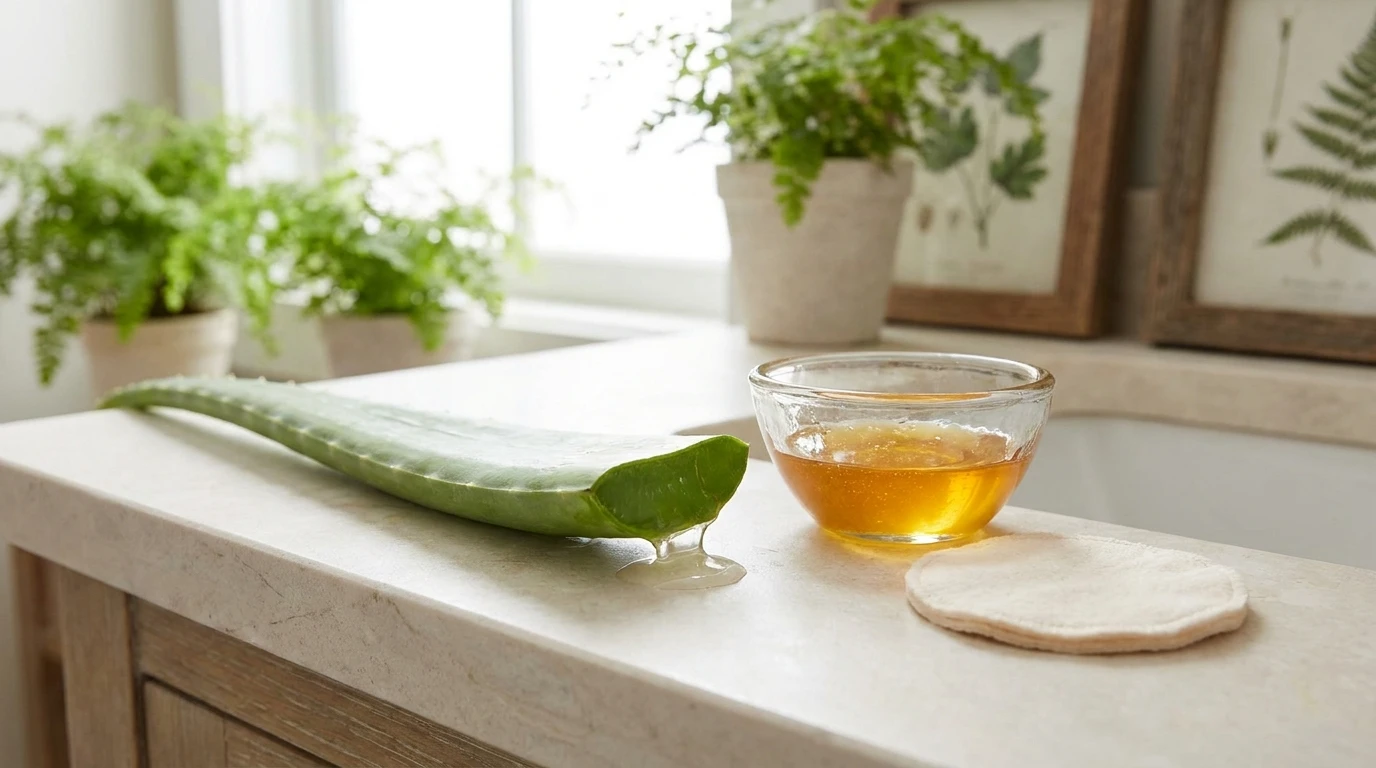
Before using anything on your face, patch test it. Apply a small amount to your inner forearm, wait 24 hours, and check for redness, itching or swelling. If you react, stop using it. People with sensitive skin, eczema, rosacea or known allergies should speak to a dermatologist first.
Use the remedy a few times this week rather than daily at first, and watch how your skin responds. For ideas and background on what people use, read what is a natural way to reduce wrinkles. Be realistic about it: a home remedy can leave skin feeling softer or more hydrated, but it will not erase lines.
Stop at one. Four habits are enough for a beginning, and the next job is to keep them going.
How to tell what’s working, and when to adjust your routine
After four weeks, read back through your journal. Look for patterns, not perfection.
Questions to ask yourself:
- Do I fall asleep more easily, or wake less often, than at my baseline?
- Is my energy steadier through the day?
- Has my digestion changed?
- Do I feel less tense, and recover faster after a stressful moment?
- Does my skin feel different, or has it reacted badly to anything?
Give each habit at least a few weeks before judging it. Some changes show up quickly, such as better sleep or less bloating, while others are subtle and take longer.
Adjust one thing at a time. If a habit feels like a chore, make it smaller instead of dropping it: a ten-minute walk instead of thirty, one plant-heavy meal instead of three. If something causes irritation or discomfort, stop it. If a symptom such as persistent poor sleep, unusual fatigue, or digestive pain does not improve, or gets worse, that is a reason to book an appointment, not to try another remedy.
Remember what the routine is for. As the article menopause is body maintenance, not body failure puts it, the changes of midlife call for care and attention, not alarm. Treating your habits as regular upkeep, and not as a campaign against your age, makes them far easier to keep up.
Keep a journal and track your progress
Everything in this plan depends on noticing small changes, and a written record is the most reliable way to do that. A daily entry of two or three lines covering sleep, food, movement, mood and skin will show you what is working long after you would have forgotten it.
If you would like a structured place to do this, the Menopause Naturally Workbook on Amazon is designed for journal and tracking your progress through this stage of life, and it is a good companion to the four weeks above.